Showing posts with label Russian Cities. Show all posts

Friday, February 7, 2014

Sochi opens Winter Olympics

SOCHI, Russia -- Music, dance and plenty of Russian bravado unleashed the ultimate achievement of Vladimir Putin's Russia on Friday -- a Winter Olympics to showcase the best athletes on ice and snow that the world has to offer. 
The opening ceremony on the edge of the Black Sea and subsequent games are Russia's chance to tell its story of post-Soviet resurrection to the world, and dispel the anger, fear and suspicion that has marred the buildup to these most expensive Olympics ever.
Just after the sun set over the Caucasus Mountains and along the seashore just outside Fisht Stadium in the wet-paint-fresh Olympic Park, Russian TV star Yana Churikova shouted to a pre-show crowd still taking their seats: "Welcome to the center of the universe!"
[+] EnlargeSochi Opening Ceremonies
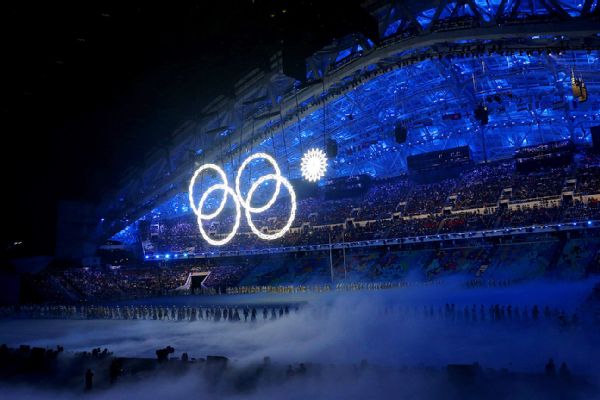
Richard Heathcote/Getty ImagesOne of the Olympic rings failed to transform from a snowflake at Friday's opening ceremony in Sochi.
For the next two weeks, it certainly is for the 3,000 athletes who will compete in 98 events, more people and contests than ever at the Winter Games.
A satellite image of the earth was projected on the floor of Fisht Stadium as they entered during the parade of nations, the map shifting so the athletes emerged from their own country. The athletes from the Cayman Islands arrived wearing shorts.
After Greece, traditionally first as the birthplace nation of Olympic competition, the teams marching into the stadium in Russian alphabetical order, putting the U.S. between Slovenia and Tajkistan.
Before the athlete's entrance, the ceremony hit an early bump when only four of the five Olympic Rings materialized in a wintry opening scene.
Five large, glowing snowflakes emerged from a whimsical opening meant to depict the four seasons. They floated to the top of Fisht arena and, one by one, started to morph into the rings. But only four joined together while the fifth remained a snowflake, apparently stuck behind the rest of them.
The five were supposed to join together and erupt in pyrotechnics to get the party started. Instead, they were eventually darkened and moved out of the arena, just as Putin was introduced.
The broken snowflake isn't the first opening ceremony blunder in Olympic history, of course. Vancouver, Sydney and Seoul all had issues with the torch lighting.

All eyes on Russia as opening ceremony marks start of Winter Olympics in Sochi

By Faith Karimi and Michael Martinez, CNN
February 7, 2014 -- Updated 1137 GMT (1937 HKT)
(CNN) -- Russia kicks off the opening ceremony Friday in Sochi as the world turns its attention to the costliest Olympic Games in history.
Spectators from all over the world will watch the lavish event and introduction of athletes, marking the official start of the Winter Olympics.
Light shows and music, lots of it, will fill the air.
"Most of the ceremony focuses heavily on Russian classical music," said Konstantin Ernst, the main creative producer of the ceremony.
U.S. warns airlines of possible attack
Sochi scrambles as crowds arrive
The dangers of slopestyle snowboarding
"Unfortunately, unlike London, we cannot boast a plethora of famous world-known pop performers. This is why we are now focusing on what Russia is best known for musically around the world; namely, classical music."
Despite anxiety about terror strikes, controversy over gay rights and ridicule for poor preparations, the nation's officials have maintained that the sites in Sochi are secure.
It will be "the safest place on Earth during the Olympics," said Dmitry Chernyshenko, head of the Games.
Russian President Vladimir Putin, who pushed the International Olympic Committee to hold the Games in the nation, will attend the ceremony.
"The head of state is expected to declare the Games open during the ceremony," Ernst said. "It is a requirement. And naturally, Mr. Putin will be doing just that."
The ceremony, the only event scheduled for the day, will last about two and a half hours.

Thursday, February 6, 2014

Olympic Hotel Horrors Have Been Blown "A Little Out of Proportion," Sochi Is "Beautiful"

Construction continues at prior to the Sochi 2014 Winter OlympicsUs Weekly senior reporter Jennifer Peros checks in from the 2014 Winter Olympics in "beautiful" Sochi, Russia, where she says the city's hotel horrors have been blown "a little out of proportion"Credit: Lars Baron/Getty
The 2014 Winter Olympics in Sochi, Russia, haven't even officially started yet, but they've already gotten a pretty bad rap, thanks in part to horror stories about the conditions of the city's hotels. Reports of brown water, broken doors, unfinished construction, and plumbing problems have spawned the Twitter hashtag "#SochiProblems" -- but Us Weekly senior reporter Jennifer Peros says things aren't nearly as bad as they sound. Read her first-person, on-the-ground account of Sochi below.
Sochi is beautiful and everything is brand-new. Definitely different from most of Europe, though! No one really speaks English, including most volunteers in Olympic Park. It's also not a resort town...yet. They built a city for these games, and it's not quite ready.

Sochi Olympic Games officially under way

The 2014 Olympic Games in Sochi, Russia have begun. Downhill skiing, luge and figure skating are among the first events.

Maria Sharapova downplays Sochi security worries

Maria Sharapova lived in Sochi for a few years after moving to the city with her family at the age of 2.
STORY HIGHLIGHTS
  • Maria Sharapova is confident the 2014 Winter Olympics will be a success
  • Tennis star believes people should not worry about their safety in Sochi
  • The Russian spent a number of years living in Sochi as a child
(CNN) -- The build-up to the 2014 Winter Olympics has been blighted by concerns for safety but tennis star and Games Ambassador Maria Sharapova is convinced there is nothing to worry about.
Be it fears for security during the 18-day-long event or doubts about how gay people will be treated, there has been a sense of uneasiness surrounding those heading to Sochi.
Recent months have seen bombings in Volgograd and reports of suicide bombers dubbed "black widows" readying themselves for operation during the Games, which run from February 6-23.
Meanwhile the host nation's government banned what it defined as "gay propaganda" in 2013 -- a move that many believe effectively stops the freedom of gay rights protests in Russia.
Despite all of this, Sharapova, who moved to Sochi at the age of two and went on to spend much of her childhood there, is expecting the Olympics to be a success.
Maria Sharapova's defends Sochi
Welcome to Sochi: City of contrasts
Russia cracks down on 'militants'
Sochi by the numbers
Tweets show lack of prep for Sochi games
"Once I arrived here, I knew that all the athletes will feel extremely safe," the 26-year-old told CNN in Sochi.
"I certainly had my doubts before, because I've been reading a lot about the city itself. Over the last few months I've been reading a lot of the media and watching television, but now I've seen how everything has come together."

Despite her worries prior to returning to Sochi, the four-time grand slam winner has stressed that anybody attending the Games, including the athletes themselves, has no reason to be concerned.
"The security has been tough but in a very safe way and in a safe manner," she said.
Sharapova is an Olympian herself, having represented Russia in the Olympics Games two years ago, when she won a silver medal in the women's singles.

The world No. 5 experienced first hand the hard work that went into making London 2012 a success, and sees no reason why that cannot be replicated in Sochi.
"As an athlete, security is really important. I experienced it in the Summer Games and really appreciated it. I think it's extremely important and we all expect that kind of safety," she said, before turning her thoughts to the preparations.
"For many years we were hearing whether everything would be ready or not: whether the the rail stations would be ready, how were the athletes going to go up to the mountains from the Olympic Park.

"All those questions raised a lot of concerns, but once I got here I realized that everything would be alright."
Sharapova explained that watching the Olympics was a far bigger childhood memory for her than viewing any grand slam tennis competition, and revealed that figure skating and ice hockey were the sports she was most looking forward to following.
She is similarly excited about the transition of her former home city.
"Many things have changed in the last 20 years or so," she said.
"It has been such an incredible turnaround since winning the (right to host the) Olympics. I am so happy that everyone has a chance to come here and visit the true meaning of the city - because at its core, it's a very beautiful city that is so full of nature.

"It's such a unique opportunity to be able to swim in the Black Sea and then drive an hour up to the mountains to ski -- that's the type of experience we want to share with everyone that comes here."
#sochi2014, #sochi, #olympics

Sochi's stray dogs find shelter, at least while Games go on

Dan Wolken, USA TODAY Sports

BARANKOVA, Russia — At the end of a road that winds through a mountain overlooking downtown Sochi — the last mile or so an unpaved, uninhabitable mess of mud and gravel — roughly 100 stray dogs that have been removed from Olympic Park are enjoying their reprieve from the slaughterhouse.
Some of them lay on the dirt, soaking in sunshine with their eyes closed. A few small puppies nip at each other and roll around in sawdust, while others make eager introductions to visitors, almost begging to be adopted. They perk up and start yapping when Jenya Popov, 25, who has been hired to live in a nearby aluminum shed with just a tiny cot, a stove heater and several bags of dog food, starts stirring around 3:30 p.m., eventually emerging with a large silver bucket.

Everything You Need to Know About Sochi, Russia

Olympics 2014: US Warns Airlines About Toothpaste Tube Bombs
ABCNews.com
It's been seven years since Sochi was chosen as the site to host the 2014 Olympic Games, and the Russian city's moment on the world stage has finally arrived.
As the globe's elite winter athletes get settled in Sochi, here's everything you need to know about the city by the Black Sea.
How Do You Pronounce Sochi?
Let's get the basics out of the way. The city's name is pronounced So-chee. Not So-chai. Not Saatchi, like Nigella Lawson's husband. Listen to the Merriam-Webster pronunciation here.
PHOTO: Sochi and the surrounding Caucasus mountain range and Russian regions of Chechnya and Dagestan.
Reuters
Where Is Sochi?
Sochi is located 5,178 miles east of New York and 995 miles south of Moscow.
The subtropical resort town is situated along the Black Sea and boasts pebble beaches and palm trees, making it a playground for Russian jet-setters.
While it may be a nice place to visit, Sochi has some volatile neighbors.
An alert issued by the U.S. State Department ahead of the games noted a recent string of suicide bombings in Volgograd, Russia, a transportation hub to the northeast of Sochi. It also cited the region's decade-plus-long struggle against Islamic terrorism, which has included bombings at airports, hotels, entertainment venues and markets, among others.
Sun-Soaked Images from Sochi, Russia
Mikhail Mordasov/AFP/Getty Images
Here's Why Sochi Is Known As the 'Russian Riviera'
It may be the site of the winter Olympics, but Sochi is actually a popular summer resort town with some incredible Black Sea beaches.
The subtropical temperatures make Sochi a hotspot for tourists who want to soak up the sun.
Vladimir Putin called the town a "unique place" when it was being considered by the International Olympic Committee as a potential spot for the 2014 Games.
"On the seashore you can enjoy a fine spring day, but up in the mountains it's winter," Putin said, according to the Sochi Project.

Sochi's Infrastructure Has Been Revamped for the Games
Billions of dollars have been poured into Sochi ahead of its big moment on the world stage. According to the Official Sochi 2014 guide, that includes:
  • More than 200 miles of roads and bridges and more than 125 miles of railway tracks.
  • At least 690,000 jobs were created or maintained due to Olympic projects.
  • PHOTO: Joseph stalins former dacha, built in the 1930s on the grounds of the Zelenaya Roscha sanatorium in the Krasnodar region near Sochi, Russia, seen Jan. 2, 2013.
    Sovfoto/UIG/Getty Images
    Even Joseph Stalin Had a Home in Sochi
    The former Soviet dictator had a luxury villa in Sochi where he was said to retreat for breaks during World War II.
    Among the things tourists can expect to see in Stalin's home are an eerily life-like wax figure of the dictator, the bullet proof couch where he liked to watch movies and a weighted cue he used to shoot billiards.
    There's also a must-see mosaic of another dictator, Vladimir Lenin, located in the center of town.
    For the Traveler
    The easiest way to get to Sochi is to fly into Moscow or St. Petersburg and then hop on one of the multiple daily flights to Sochi.
    Expect jet lag if you're coming from the U.S. Sochi is nine hours ahead of Eastern Standard Time and a full half-day ahead of people on the West Coast of the United States.
    It's recommended travelers have Russian rubles on hand to use during the games. In case you're wondering the exchange rate, US$1 is equal to about 35 rubles.
    PHOTO: General view of the Sochinka river in downtown Sochi, Feb. 10, 2012 in Sochi, Russia.
    Alexander Hassenstein/Bongarts/Getty Images
    Sochi's Mayor Claims There Are No Gay People in Town
    There's been anti-gay sentiment brewing in Russia and now, ahead of the games, Sochi's mayor has claimed there are no gay people in his city.
    "It's not accepted here in the Caucasus where we live. We do not have them in our city," Anatoly Pakhomov told BBC Panorama in an interview.

    Dacha, chacha and a gay bar: 9 ways Sochi surprises

    (CNN) -- As one of the warmest cities in Russia -- a country with no shortage of snowy terrain -- Sochi seems an unusual place to host the Winter Olympics.
    But that's not all that's notable about it.
    It's also the latest hot spot for dacha-seeking oligarchs -- and President Putin.
    Plus it has gay bars (despite President Putin).
    And Cossacks.
    Not necessarily in the gay bars, though.
    Stalin\'s dacha: $10 tours.
    Stalin's dacha: $10 tours.
    1. Anyone who's anyone (or who can afford it) has a dacha there
    The infamous Russian who put the "Russian Riviera" city on the map wasn't quite the hair-shirted leader you might expect.
    Communist dictator Joseph Stalin popularized Sochi after building a summer dacha -- Russian vacation home -- here in the 1930s.
    In the years since, the destination has become a summering spot for a succession of Russian politicos -- all the way up to President Putin, who has two dachas in Sochi.
    Giuliani: Sochi threats hard to contain
    Sochi dachas have also become increasingly in demand from the ultra-rich so-called oligarchs who divided up much of the Russian economy among themselves with the downfall of the Soviet Union.
    Sochi scrambles as crowds arrive.
    The popularity of the resort among the wealthy and powerful has led to criticisms that it's become unaffordable to the ordinary Russians who flocked to the city after its establishment as a vacation spot in the 1950s.
    You can tour the dacha that launched the locale, complete with a wax version of the "Man of Steel," avuncular pipe in hand.
    Stalin's Dacha, Kurortny Prospekt 120, Khostinsky District; +7 (862) 267 05 02; tours - $10 -- by appointment

    Wednesday, August 5, 2009

    Kazan Video

    KAZAN is the capital of Republic of Tatarstan in Russian Federation. This ancient and beautiful city is a popular travel destination.

    Wednesday, July 15, 2009

    Black Sea Resort Gelendzhik

    Gelendzhik is a resort town in Krasnodar Krai, Russia, situated on the Gelendzhik Bay of the Black Sea, between Novorossiysk (31 km to the northwest) and Tuapse (93 km to the southeast).

    Monday, October 6, 2008

    A travel video guide about St Petersburg in Russia - Mark TV

    This video won the Best Comedy Award in the American Motion Picture Society festival 2008.

    It has also one of the nominated films in the International festival of Outdoor Films held in the Czech Republic

    This video was awarded a Silver Diploma in The Cotswold Festival 2008.

    A travel guide St Petersburg. During my visit in October 2006 I took a lot of photos and turned them into this in depth travel guide.

    Monday, August 27, 2007

    Museum of Russian Emigration to Open in Stavropol Territory

    The Museum of Russian Emigration will be open in Kislovodsk town on the initiative of the well-known patron of art, Baron Eduard von Falz-Fein from Liechtenstein. He has already been awarded the Pushkin Medal for his contribution into preservation of the cultural heritage of Russia. According to him, the choice of Kislovodsk town as the place for the future museum was not accidental: this Russian town was one of the centres of the so-called “Caucasus emigration”. The patron of art presented the museum with the sculpture of Fyodor Shalyapin created by the famous sculptor Dmitry Tugarinov. It was in Kislovodsk were the last Russian concert of the great bass singer took place before he emigrated. Falz-Fein is known as the patron of art who has searched for treasures of the Russian Emperors’ family. Throughout all his life the baron purchased many works of art at auctions, including Sotheby’s and Christie and then handed them over to Russia.

    Source: gif.ru, rian.ru

    Sunday, August 12, 2007

    Scraping by in a Russian resort


    In the second of a series from southern Russia, the BBC's Steven Eke reports on the wealth gap in the spa town of Pyatigorsk.
    "Pyatigorsk" means "five peaks", and is the Russified version of "Beshtau", the Turkic name for the highest mountain in the region. A town of some 200,000 people, it is the capital of southern Russia's spa resorts.
    Pyatigorsk has a unique atmosphere. This year, summer has brought a drought and temperatures of up to 46C. There are many Russian and foreign tourists.
    The town's Soviet-era sanatoria are doing well, after the economic depression of the 1990s. Some are reserved for the military while others are purely commercial - and far from cheap.
    Unusually for Russia, there are also many cyclists, testing their stamina on the winding mountain roads on the outskirts of the town.
    Many of the town's mineral waters are said to have special therapeutic value. At one spot, bathers were immersing themselves in a bubbling pool of sulphuric water.
    I am travelling from southern to central Russia to find out how people far from Russia's boomtowns live. Here, society is conservative. There is fear of crime and "banditry", given the instability plaguing much of the North Caucasus.
    Making ends meet
    The local people are extremely hospitable, and more than happy to talk about themselves and their lives. Whatever the arguments between London and Moscow, I have experienced no hostility whatsoever.

    Life for most of Pyatigorsk's permanent residents is far from as holiday
    Most say life is very hard. Salaries are low - $100-200 a month on average, while prices continue to grow.
    It is not uncommon for people here to do more than one job. There is a pervasive cynicism about politicians, with many accusing them of personal enrichment at society's expense.
    There are some new, smart restaurants and shops. But there are few customers, with recreation for most people being an evening stroll down the town's main street. It is known locally as "Broadway". A huge statue of Lenin still towers at one end of it.
    Behind the lush greenery and picturesque mountain setting, there is considerable urban decay. Many of the once grand 19th-Century buildings are now fading.
    Much of the Soviet-era architecture is shabby, especially housing. In some suburbs, water is only available for a few hours a day.
    Forced to flee
    I came across an ethnic Russian family who had fled the war in Chechnya. They complained bitterly that they had been "abandoned" by the Russian government.

    This family are among thousands who fled Chechnya's wars
    I found seven members of the same family living in a ramshackle house just a few minutes from the town centre. They had waited four years for official compensation for the loss of their property in the Chechen capital, Grozny. By that time, the sum on offer had been eaten up by inflation.
    Out of curiosity, their neighbours came to find out who the unusual visitors were.
    In a conversation I have heard so often all over the former Soviet Union, they explained how, in Soviet times, a shashlik (meat kebab) and a jug of beer could be bought for less than a rouble. Now, they said despairingly, they could hardly afford their daily bread and (sometimes not even daily) milk.
    In keeping also with Soviet traditions, the neighbours then reported the arrival - and the questions - of the foreign journalists to the authorities. Old habits die hard.
    The businesswoman
    A very narrow section of society has prospered. In this part of Russia, it forms a still very embryonic middle class.

    Natasha advocates self-reliance
    Another family I visited has done very well.
    Natasha, who made her money in business, now describes her occupation as the "fulltime upbringing of her daughter".
    Her flat, in a new apartment building, would put those of many Londoners to shame.
    Life was improving, she insisted. But given what 70 years of communism had done to Russia, she added, people needed to be realistic about the pace of change.
    She urged her fellow Russians to learn to rely more on themselves, and less on the state. http://news.bbc.co.uk

    Monday, July 9, 2007

    Peterhof - Treasures of Saint-Petersburg

    Treasures of Saint-Petersburg
    Peterhof is the splendid summer residence of the Romanov Dynasty. The idea to create a residence as luxurious as the famous Versailles in France occurred to Peter I in 1714.
    The Emperor himself was responsible for the design of the palace and of the surrounding parks, as well as for the idea of many fountains. The construction of the entire ensemble went on for two centuries.Peterhof's palaces house a rich collection of paintings and applied art of the 17th and 18th centuries.
    The parks of Peterhof cover an area of around 2500 acres and are decorated with elegant statues and ornate fountains.


    Director: Vladimir PtashchenkoText: Nina Vernova, Natalia Ptashchenko
    From: igorzee

    Krasnodar Russia


    Krasnodar is the administrative center of Krasnodar Krai, the most populous southern region of Russia. Krasnodar is situated on the River Kuban, approximately 1000 km (620 miles) south from Moscow, and 120 km (75 miles) north from the Black Sea, on the periphery of the Caucasus.

    Over one hundred and forty nationalities live together peacefully here. Over 85% of the population is Russian, there are also: Armenians, Georgians, Ukrainians, Greeks, Tatars, and other peoples from the Caucasus, Central Asia, and Eastern Europe.
    The original name Ekaterinodar meant 'Catherine's Gift' in recognition of the Russian Queen "Catherine The Great". After the Russian Revolution of 1917 the city received it's current name Krasnodar, which means 'Beautiful Gift'.
    Today Krasnodar is a dynamic modern city - major industrial, agricultural, and cultural center in the south of Russia. After Moscow, it is the fastest growing region in Russia.

    Sunday, July 8, 2007

    Images of Sochi, the Olympic Games City of 2014


    Sochi is the most popular Russian resort, situated in the Krasnodar Krai, near the Russian border with Abkhazia, Georgia. It is located in a spectacular natural setting with the snow-capped peaks of the Caucasus Mountains overlooking the gentle shores of the Black Sea. At 147 km, Greater Sochi is the second longest city in the world.
    From the 6th to the 15th centuries, the area belonged to kings of Abkhazia, who built a dozen churches in Adler, Loo, and other districts of Greater Sochi. Ruins of an 11th century Byzantine basilica still survive in Loo. From the 15th century, the coast was controlled by the Ottoman Empire. It was ceded to Russia in 1829, as a result of the Russo-Turkish War.Sochi was founded in 1838 as Alexandria settlement (Navaginskoye fortification, 1864 - Dakhovskiy Outpost, 1874 - Dakhovskiy Posad). It had been incorporated as a city and got its present name in 1896. Sochi was established as a fashionable resort area in the years of the Soviet regime, when Joseph Stalin had his favourite dacha built nearby which was tightly protected.The resort has a temperate climate and boasts many sanatoria and mineral baths. There are also tea plantations, the most northerly in Europe. The permanent population is about 315,400 (2004) but millions more arrive each summer, when the city is home to the annual Film Festival "Kinotavr" and the vacation place of Russian leaders. A UNESCO World Heritage Site, the Caucasian Biosphere Reserve, sprawls just north from the city.


    Quick facts about Sochi

    Area:
    76,0 sq km
    Location:
    Sochi is a big resort area stretching for 145 km along the Black Sea coast, in the shadow of the Caucasus Mountains.
    Geographiccoordinates:
    43 50 N, 39 40 E
    Population:
    approx 329,000 (2005 est.)
    Foundation:
    1898
    Climate:
    The average air temperature in summer is +26,5°C, the average water temperature is +24,5°C. During Sochi "winter" the average air temperature is +9°-10°C.
    UTC/GMT Offset:
    UTC/GMT + 3 hours
    Area code:
    8622
    Major attractions:
    Dendrarium, Bolshoi Theater, Artistic museum of Sochi

    http://www.visitrussia.com

    Saturday, July 7, 2007

    The Golden Ring

    WHAT IS THE GOLDEN RING: 'The Golden Ring' is one of the oldest Russian routes. It goes to the north-east of Moscow and forms a circle. There are many interesting ancient Russian cities and towns along the way, full of history and unique Russian architecture of the XII-XVII centuries.The 'classical' route (counter clockwise) starts from Moscow, goes through Vladimir, Suzdal, Kostroma, Yaroslavl, Rostov Velikiy, Pereslavl-Zalesskiy, Sergiev Posad. All cities and towns are located relatively close to each other, the 'Golden Ring' forms a ring, so from one place you can reach to another and make a circle until you get back to the one you started with. Probably, most often you'll use buses to move along the golden ring, sometimes you 'll use trains. You can also 'make' the golden ring trip by car.

    WHY GO THERE?
    Russian History & Architecture. The 'Golden Ring' route is known for the famous old cities and towns along the way, so one of the reasons to go
    there is to see Russian architecture, old churches made of white stone, hear the bellring, see old fortifications, fortresses, beautiful monasteries, and learn more about history of Russia. For such trip, the 'classical' route (Vladimir, Suzdal, Kostroma, Yaroslavl, Rostov, Pereslavl-Zalesskiy, Sergiev Posad) will be the most interesting. Just be careful: there are so many churches and monasteries, that it can become too much.Russian Countryside. If you're staying a few weeks in the busy Moscow, you might feel like taking a little break from the pollution,
    the cars and the noise of the capital after a moment. In the trip to the smallest towns of the 'Golden Ring' you will get to see calmer, slower, more peaceful life, walk around hilly countryside, and just rest. For such trip Suzdal and Rostov Veliky (both 3-4 hours by train or by bus from Moscow) are the best.Provincial Russia. Also, you'll be interested in going to the biggest towns of the Golden Ring, if you want to experience another, provincial way of
    life in Russia. Such towns as Vladimir, Ivanovo, Kostroma, Yaroslavl can get you a pick of the Russian province: more traditional way of life, not yet as much westernized, fancy, and hectic as the big cities, with some relics of the Soviet times.

    A MAP OF THE GOLDEN RING:

    THE CITIES ALONG THE GOLDEN RING. The cities and towns of the Golden Ring counterclockwise direction:

    VLADIMIR: The first town of the Golden Ring, 179 kilometers to the east of Moscow with 378 thousand people living there. It is located on the railway to Nizhniy Novgorod, and it is the first stop along the Trans-Siberian route. Vladimir is an old Russian town, it used to be capital of Russia in the 12th century.There are many interesting sights, like old churches, monasteries and museums, but the interest in the city is in its provincial atmosphere and its contrast with the big cities.

    SUZDAL: A calm ancient Russian town 38 kilometers north of Vladimir with around 13 thousand inhabitants. Suzdal is officially protected from the industries, and the old architecture and buildings are kept intact. The hilly green town is very seducing, walking around is a pleasure, the monasteries and old beautiful churches offer dreaming views.You can even camp freely along the small river 'Kamenka' that goes through the town, or next to the Kremlin or next to a monastery.Suzdal is the most similar to Rostov-Velikiy of all the towns along the Golden Ring, and the two towns are located almost the same distance from Moscow (though in different directions).

    IVANOVO: It is quite a big city (450 thousand inhabitants), located between Suzdal (70 kilometers to the south) and Kostroma. Ivanovo is a real Russian industrial city: grey residential buildings, dirty streets, polluted atmosphere, relics of the Soviet times kept intact. Perhaps, you will be happy just to go through this city, but it will be the most interesting stop along the Golden Ring if you want to get the taste of 'industrial' Russian province.

    KOSTROMA: A surprisingly calm and inviting town, located on Volga river, 120 kilometers north of Ivanovo. The interest is to walk around the town, especially early morning, or late evening, and see the Ipatiev's Monastery on the other side of Volga.

    YAROSLAVL: Yaroslavl got its name from Yaroslav Mudry, who founded the town in the beginning of 11th century, at the place where Volga river meets Kotorosl. Now it is a large industrial city, the biggest along the Golden Ring (630 inhabitants), nevertheless very interesting because of its history, architecture, and city life.

    ROSTOV VELIKIY: An ancient Russian town located on the 'Nero' lake. The history of this place started 4 thousand years BC, when the first tribes stayed next to the lake. Until the 11th century the territory of Rostov was inhabited by the Finn-Ugors 'Meryans' people, and the city of Rostov was founded by them (it is known since the 9th century). Slowly they assimilated with the Slavs, who came from the south.Now it is a small town (32 thousand inhabitants), old buildings, the Kremlin, and authentic Russian architecture.Rostov is the most similar to Suzdal of all the towns along the Golden Ring, and the two towns are located almost the same distance from Moscow (though in different directions).

    PERESLAVL-ZALESSKIY: An old Russian provincial town, famous for its many monasteries, old churches, the first boat build by little Peter the Great, and Pleshcheevo Lake (which has the status of national park from 1988).

    (http://www.waytorussia.net)

    Sunday, June 24, 2007

    Peterhof; Russia, St. Petersburg

    Image Description: Fountain

    Photo Russia, St. Petersburg, Peterhof

    Photographer: Dmitrij Karmanov

    Digital Camera


    Upper Garden of Peterhof; Russia, St. Petersburg
    Photographer: Dmitrij Karmanov
    Digital Camera

    Source


    Sunday, May 27, 2007

    The Omsk City Photo Blog

    Surfing around I found the Omsk City Photo Blog with nice images of Omsk. The Archive dates back to December, 2004.

    Blog DirectoryMarketing Blog Directory | Add Blog
    List your blog on the Internet's biggest and best Marketing Blog. The Marketing Blog is the premier source for the finding and posting marketing related blogs. Join for FREE! Blog Directory Top Blogs WMas - интернет каталог блогов

    Romow Web Directory - Online Internet Marketing Center